
How to Perform Salat — The Complete Shia Method
Salat is the pillar of the religion. The Holy Prophet (s) said: “The first thing a servant will be asked about is the prayer; if it is accepted, everything else is accepted, and if it is rejected, everything else is rejected.” This page teaches the daily prayer exactly as it is performed according to Shia (Ja‘fari) fiqh: what to say, and — just as important — where every part of the body should be in each position, so that a beginner can stand, bow, prostrate and sit correctly from the very first prayer.
Read the page in order. First the conditions, then the first rak‘ah step by step, then the second rak‘ah, and finally what changes when the prayer has three rak‘ahs (Maghrib) or four rak‘ahs (Zuhr, Asr and Isha).
The Five Daily Prayers at a Glance
Fajr (Subh) — 2 rak‘ahs. Recited aloud.
Zuhr — 4 rak‘ahs. Recited quietly.
Asr — 4 rak‘ahs. Recited quietly.
Maghrib — 3 rak‘ahs. Recited aloud.
Isha — 4 rak‘ahs. Recited aloud.
“Aloud” (jahr) and “quietly” (ikhfat) refer to the recitation of Surah al-Hamd and the second surah in the first two rak‘ahs only. Men must recite Fajr, Maghrib and Isha aloud and Zuhr and Asr quietly; women may recite the loud prayers quietly if a non-mahram man can hear them. The tasbihat of the third and fourth rak‘ahs are always recited quietly, in every prayer.
Before You Begin — Conditions of the Prayer
Purity (taharat). You must have wudu (or ghusl / tayammum where required), and your body and clothes must be tahir.
Time. Each prayer has its own time; the prayer is performed within it. Zuhr and Asr may be prayed together, and so may Maghrib and Isha.
Qibla. Face the Ka‘bah. If you cannot determine the direction, act on your strongest estimate.
Clothing. A man must cover at least the private parts; a woman must cover her whole body except the face, the hands to the wrists and the feet to the ankles. The clothes must not be usurped, not from a non-halal animal, and for men not of pure silk or gold-embroidered.
Place. It must not be usurped, must be still (not a moving vehicle where stillness is impossible) and the place of the forehead must not be more than four closed fingers higher or lower than the place of the knees and toes.
The turbah (sajdah-gah). The forehead must be placed on earth or on something that grows from the earth and is neither eaten nor worn — a clay tablet (turbah), a stone, wood, or a straw mat. Prostration on carpet, cloth, plastic or metal is not valid.
The Obligatory Parts of the Prayer
The prayer has eleven obligatory parts (wajibat): niyyat, takbirat al-ihram, qiyam (standing), qira’at (recitation), ruku‘, sujud, dhikr, tashahhud, salam, tartib (order) and muwalat (continuity). Five of them are pillars (arkan): niyyat, takbirat al-ihram, the qiyam at the takbir and the qiyam immediately before ruku‘, ruku‘, and the two sajdahs together. If a pillar is left out or added — even by mistake — the prayer is invalid. The other parts invalidate the prayer only if omitted or added deliberately.
The First Rak‘ah — Step by Step
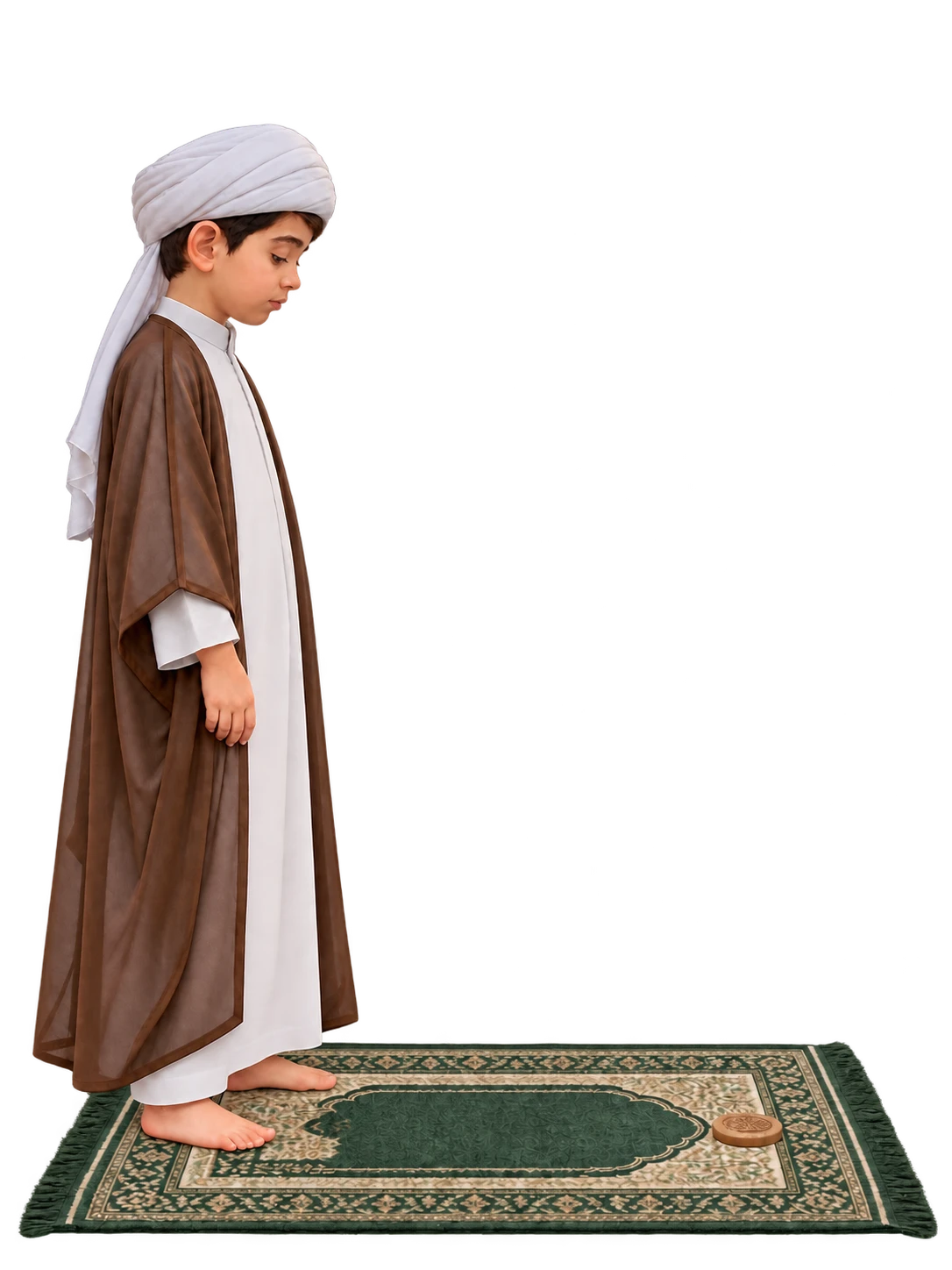
Step 1 — Qiyam and Niyyat (standing and intention)
Position of the body: Stand upright and completely still, facing the qibla. Keep the feet a little apart — anywhere from three fingers to one hand-span is recommended — with the weight evenly on both feet. Let both arms hang naturally at your sides, palms resting on the thighs. Do not fold the hands on the chest or stomach: folding the hands (takattuf) invalidates the prayer in Shia fiqh. Keep the head straight and the eyes lowered onto the turbah, the place where your forehead will rest. Do not lean on anything.
Niyyat: The intention is made in the heart; it does not need to be spoken. You simply know which prayer you are performing and that you are doing it for Allah alone. If you wish to say it, you may say, for example:
أُصَلِّيْ صَلَاةَ الصُّبْحِ رَكْعَتَيْنِ، وَاجِبٌ قُرْبَةً إِلَى اللّٰهِ
Uṣallī ṣalātaṣ-ṣubḥi rakʿatayn, wājibun qurbatan ilallāh.
I pray the Fajr prayer, two rak‘ahs, obligatory, seeking nearness to Allah.
Say “four rak‘ahs of Zuhr / Asr / Isha” or “three rak‘ahs of Maghrib” as the case may be. In Urdu the common wording is: “Two rak‘ahs of Fajr prayer, I pray, wajib, qurbatan ilallah.”
Step 2 — Takbirat al-Ihram
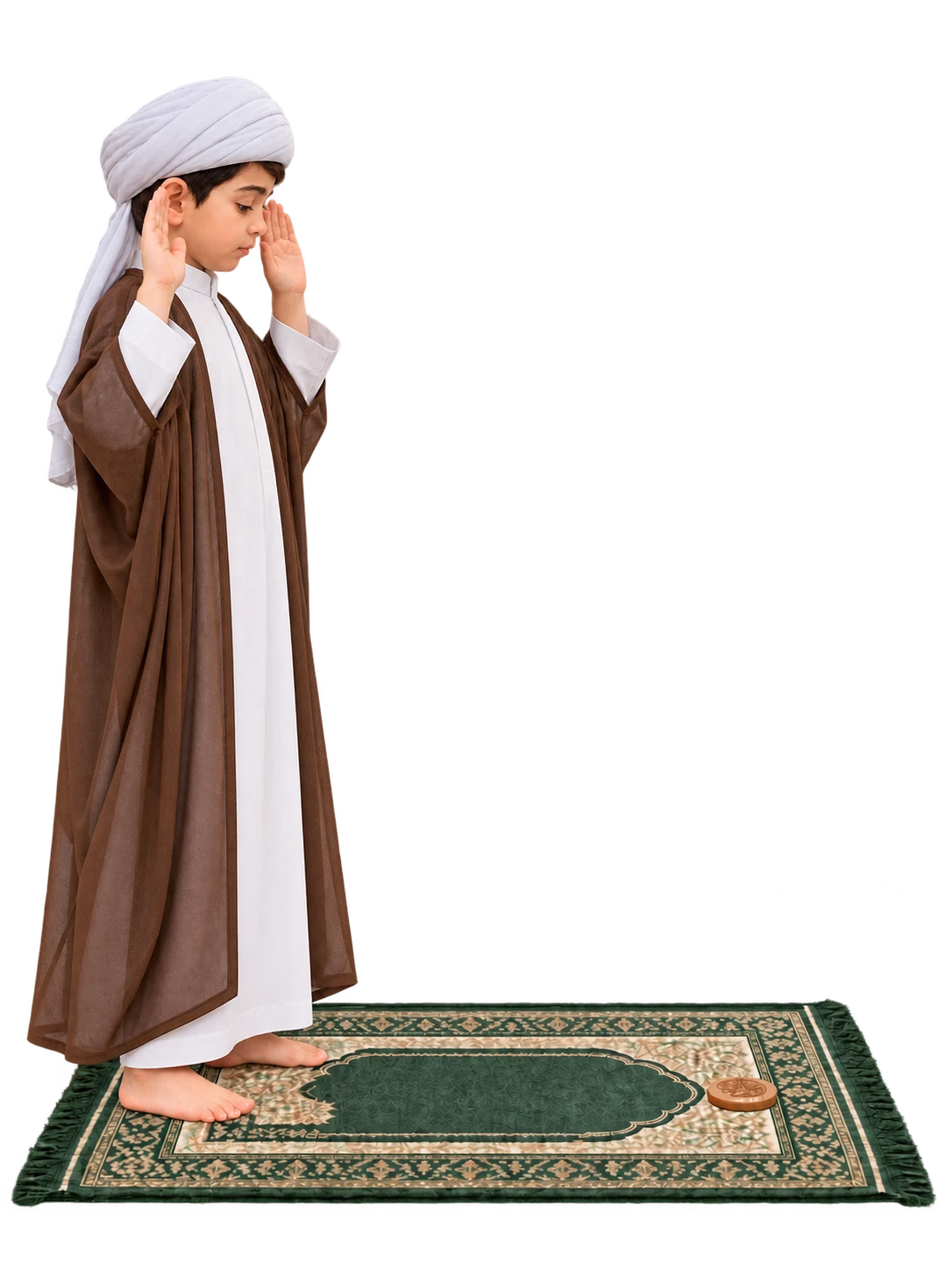
Immediately after the intention, say clearly and in correct Arabic:
اَللّٰهُ اَكْبَرُ
Allāhu akbar.
Allah is the Greatest.
Position of the body: The body must be completely still while the takbir is said. It is recommended to raise both hands to the ears as you say it — palms facing the qibla, fingers together and the thumbs alongside them — and then let the hands drop back to the sides. With this takbir you have entered the prayer: from now on you may not speak, laugh, eat, drink, turn away from the qibla or do anything that breaks the prayer.
Step 3 — Qira’at (recitation of Surah al-Hamd and a second surah)
Remain standing exactly as before, still and looking at the turbah. It is recommended to first say quietly أَعُوْذُ بِاللّٰهِ مِنَ الشَّيْطَانِ الرَّجِيْمِ (I seek refuge in Allah from the accursed Satan), and then recite Surah al-Hamd in full:
بِسْمِ اللهِ الرَّحْمٰنِ الرَّحِيْمِ
اَلْحَمْدُ لِلّٰهِ رَبِّ الْعٰلَمِيْنَ 1
الرَّحْمٰنِ الرَّحِيْمِ 2 مٰلِكِ يَوْمِ الدِّيْنِ 3
اِيَّاكَ نَعْبُدُ وَاِيَّاكَ نَسْتَعِيْنُ 4
اِهْدِنَا الصِّرَاطَ الْمُسْتَقِيْمَ 5
صِرَاطَ الَّذِيْنَ اَنْعَمْتَ عَلَيْهِمْ 6
غَيْرِ الْمَغْضُوْبِ عَلَيْهِمْ وَلَا الضَّآلِّيْنَ 7
Bismillāhir-Raḥmānir-Raḥīm. Al-ḥamdu lillāhi Rabbil-ʿālamīn. Ar-Raḥmānir-Raḥīm. Māliki yawmid-dīn. Iyyāka naʿbudu wa iyyāka nastaʿīn. Ihdinaṣ-ṣirāṭal-mustaqīm. Ṣirāṭal-ladhīna anʿamta ʿalayhim, ghayril-maghḍūbi ʿalayhim wa laḍ-ḍāllīn.
In the Name of Allah, the All-Beneficent, the All-Merciful. All praise belongs to Allah, Lord of all the worlds, the All-Beneficent, the All-Merciful, Master of the Day of Retribution. You alone do we worship, and to You alone do we turn for help. Guide us on the straight path — the path of those whom You have blessed, not of those against whom there is wrath, nor of those who are astray.
Do not say “Amin” after Surah al-Hamd. Saying it deliberately invalidates the prayer in Shia fiqh. Pause briefly and go straight into the second surah.
Then recite one complete surah. Surah al-Ikhlas is the shortest and the most common; Surah al-Qadr is also greatly recommended. Bismillah is part of every surah and must be recited with it.
بِسْمِ اللهِ الرَّحْمٰنِ الرَّحِيْمِ
قُلْ هُوَ اللّٰهُ اَحَدٌ 1 اَللّٰهُ الصَّمَدُ 2
لَمْ يَلِدْ وَلَمْ يُوْلَدْ 3
وَلَمْ يَكُنْ لَّهٗ كُفُوًا اَحَدٌ 4
Bismillāhir-Raḥmānir-Raḥīm. Qul huwallāhu aḥad. Allāhuṣ-ṣamad. Lam yalid wa lam yūlad. Wa lam yakun lahū kufuwan aḥad.
In the Name of Allah, the All-Beneficent, the All-Merciful. Say: He is Allah, the One. Allah is the All-embracing. He neither begat, nor was He begotten, and none is comparable to Him.
In Fajr, Maghrib and Isha a man recites both surahs aloud; in Zuhr and Asr quietly — but it is recommended to say the Bismillah of both surahs aloud even in Zuhr and Asr. “Quietly” still means that the lips and tongue move and you can hear yourself; reciting in the heart alone is not recitation.
Step 4 — Ruku‘ (bowing)
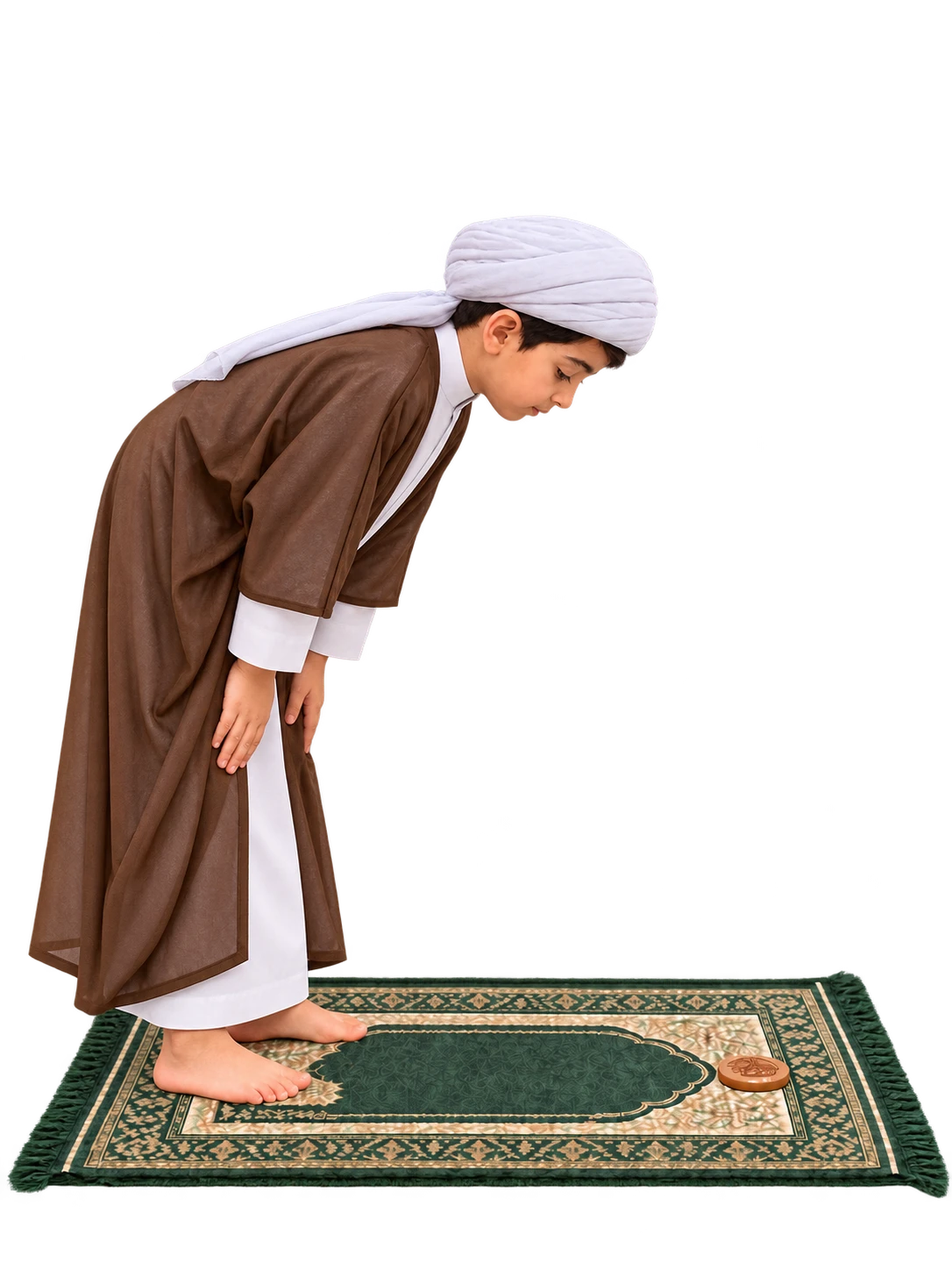
When the second surah is finished, say اَللّٰهُ اَكْبَرُ (recommended) while still standing, then bend into ruku‘.
Position of the body: Bend forward from the waist until you can place the palms of the hands on the kneecaps — bending until the fingertips reach the knees is the obligatory minimum. Keep the knees straight (not bent), the back flat and level like a table, and the neck straight so that the head is in line with the back — neither raised nor drooping. Fingers are spread over the knees. It is recommended to look at the spot between the two feet. A woman need only bend until her hands reach the thighs, and keeps the arms close to the body.
Dhikr of ruku‘: Once the body is completely still in this position, say:
سُبْحَانَ رَبِّيَ الْعَظِيْمِ وَبِحَمْدِهٖ
Subḥāna Rabbiyal-ʿAẓīmi wa biḥamdih.
Glory be to my Lord, the Great, and praise be to Him.
Saying this once is obligatory (or سُبْحَانَ اللّٰهِ three times); saying it three times is recommended. The body must not move while the dhikr is being said — say it only after you are still, and do not start rising until it is complete. Ruku‘ is a pillar: if it is missed or repeated, the prayer is invalid.
Step 5 — Standing up from ruku‘
Rise until you are standing fully upright and still, arms back at the sides. This standing is obligatory. While rising, or after standing still, say (recommended):
سَمِعَ اللّٰهُ لِمَنْ حَمِدَهٗ
Samiʿallāhu liman ḥamidah.
Allah hears the one who praises Him.
Step 6 — The first Sajdah (prostration)
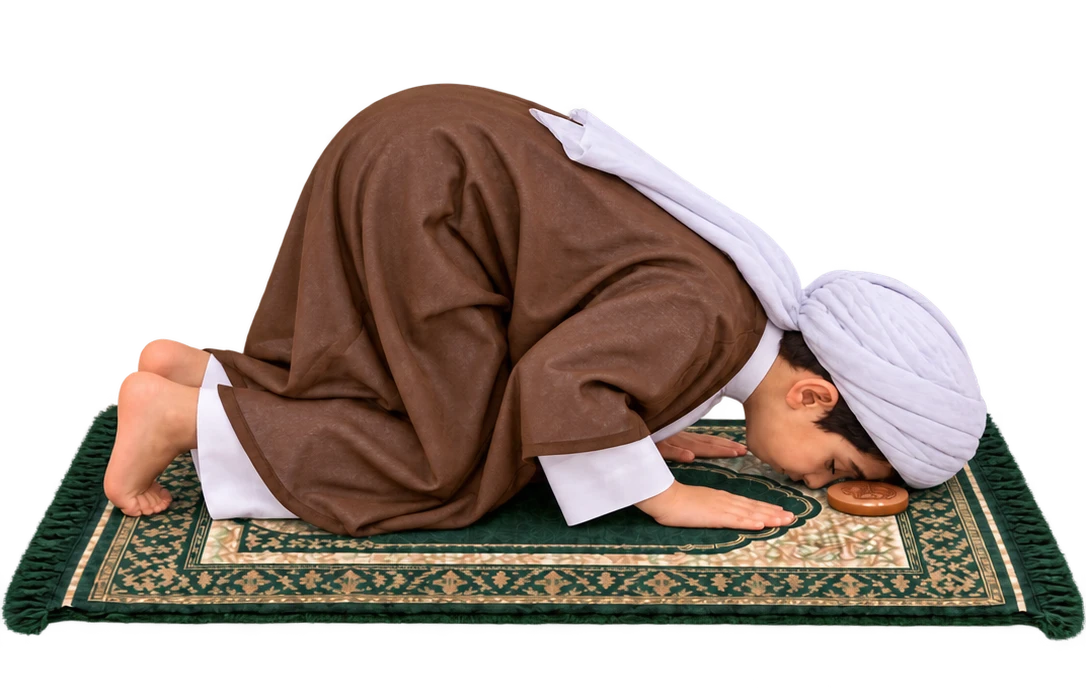
Say اَللّٰهُ اَكْبَرُ (recommended) and go down into prostration — knees first, then the hands.
Position of the body — the seven parts: Seven parts of the body must rest on the ground: the forehead (on the turbah), both palms, both knees and the tips of both big toes. Place the palms flat, fingers together and pointing towards the qibla, level with the ears or the face. Keep the elbows and forearms raised off the ground (a woman keeps them on the ground, close to the body). It is recommended that the tip of the nose also touch the ground. The forehead must be on the turbah itself: hair, a cap or a fold of cloth must not come between the forehead and the turbah. The place of the forehead may not be higher or lower than the knees and toes by more than four closed fingers.
Dhikr of sajdah: When the body is still, say:
سُبْحَانَ رَبِّيَ الْاَعْلٰى وَبِحَمْدِهٖ
Subḥāna Rabbiyal-Aʿlā wa biḥamdih.
Glory be to my Lord, the Most High, and praise be to Him.
Once is obligatory (or سُبْحَانَ اللّٰهِ three times); three times is recommended. The seven parts must stay on the ground while the dhikr is said. It is recommended to add salawat on Muhammad and his family after the dhikr.
Step 7 — Sitting between the two sajdahs
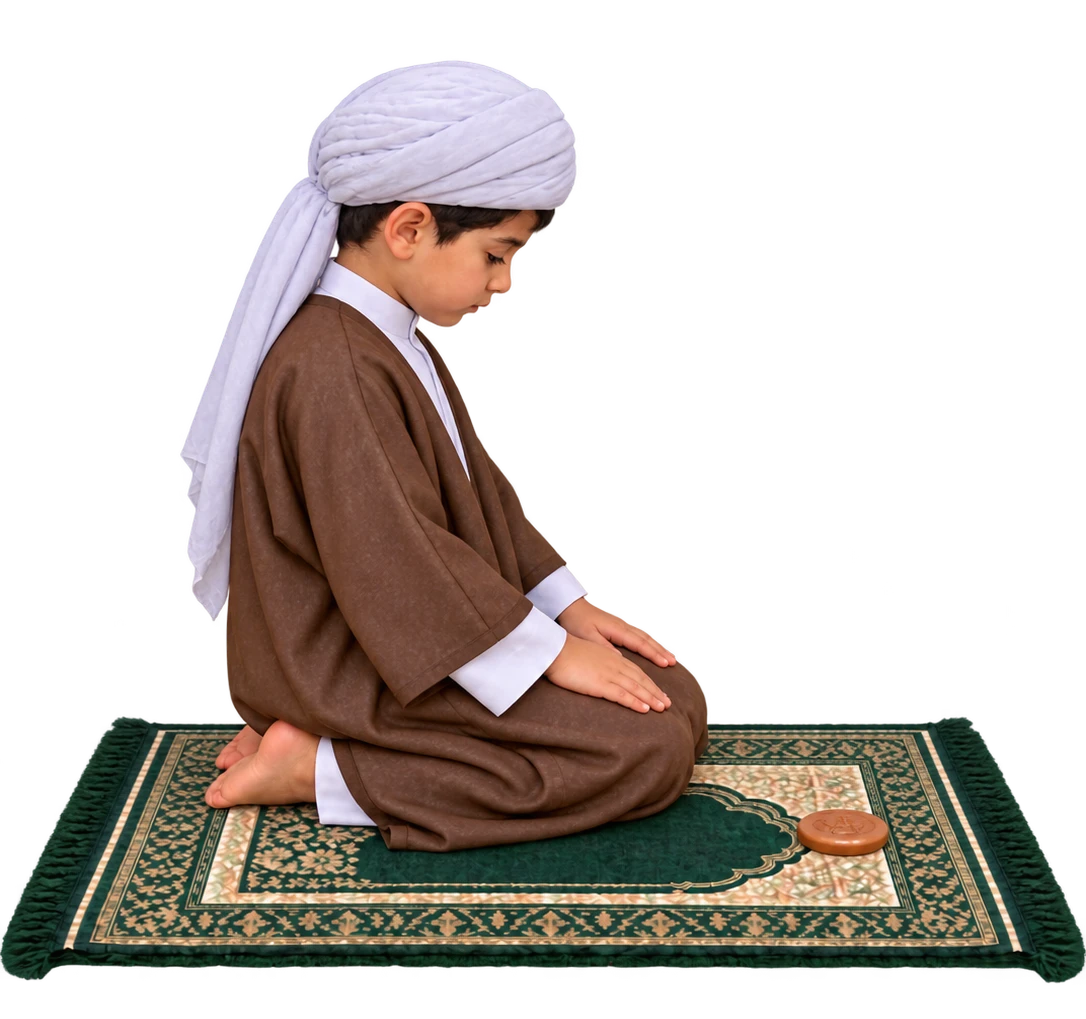
Say اَللّٰهُ اَكْبَرُ (recommended) and sit up so that the body is completely upright and still. This sitting is obligatory.
Position of the body: The recommended sitting is tawarruk: sit on the left thigh, place the top of the right foot on the sole of the left foot, rest the hands flat on the thighs with the fingers together, and look at the lap. Then say (recommended):
اَسْتَغْفِرُ اللّٰهَ رَبِّيْ وَاَتُوْبُ اِلَيْهِ
Astaghfirullāha Rabbī wa atūbu ilayh.
I seek forgiveness of Allah, my Lord, and I turn to Him in repentance.
Step 8 — The second Sajdah
Say اَللّٰهُ اَكْبَرُ and go into the second sajdah exactly as the first — the same seven parts on the ground, the same stillness, the same dhikr سُبْحَانَ رَبِّيَ الْاَعْلٰى وَبِحَمْدِهٖ. The two sajdahs together are one pillar of the prayer.
Step 9 — Rising to the second rak‘ah
Say اَللّٰهُ اَكْبَرُ, sit up straight for a moment (this brief jalsat al-istirahah, the sitting of rest, is recommended — and an obligatory precaution according to some maraji‘), then stand up, pressing the hands on the knees to rise, saying:
بِحَوْلِ اللّٰهِ وَقُوَّتِهٖ اَقُوْمُ وَاَقْعُدُ
Biḥawlillāhi wa quwwatihī aqūmu wa aqʿud.
By the power and strength of Allah I stand and I sit.
You are now standing in the second rak‘ah. The first rak‘ah is complete.
The Second Rak‘ah
Standing exactly as in Step 1, recite Surah al-Hamd and a second surah again (Step 3). No new takbirat al-ihram is said.
Qunut (recommended, before ruku‘)
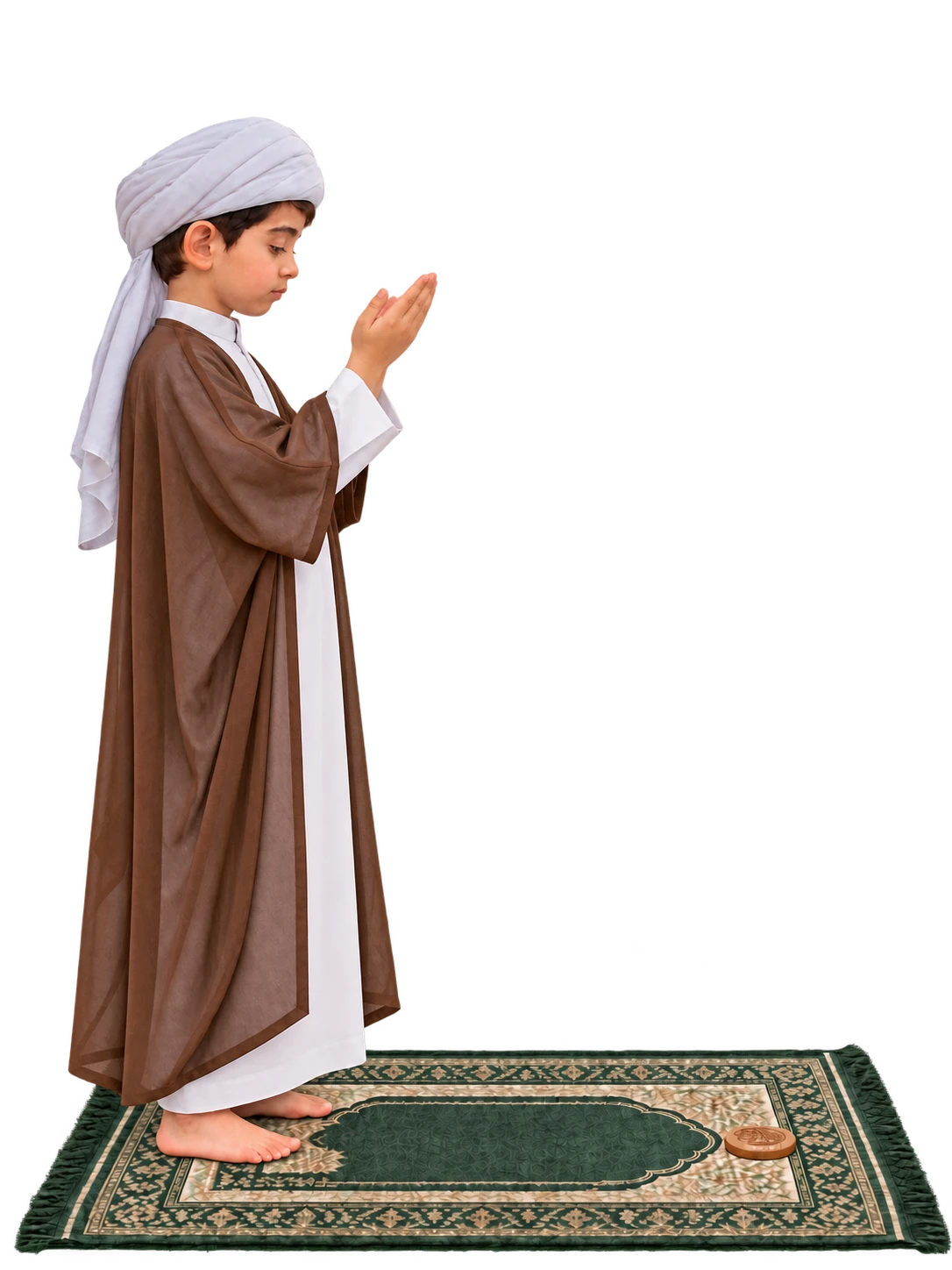
After the second surah, say اَللّٰهُ اَكْبَرُ and raise both hands in front of the face, palms upward and side by side, the fingers together and the thumbs apart, looking at the palms. Recite any dua; the following verse is the most common:
رَبَّنَاۤ اٰتِنَا فِي الدُّنْيَا حَسَنَةً وَّفِي الْاٰخِرَةِ حَسَنَةً وَّقِنَا عَذَابَ النَّارِ
Rabbanā ātinā fid-dunyā ḥasanatan wa fil-ākhirati ḥasanatan wa qinā ʿadhāban-nār.
Our Lord, give us good in this world and good in the Hereafter, and protect us from the punishment of the Fire. (Surah al-Baqarah 2:201)
Salawat — اَللّٰهُمَّ صَلِّ عَلٰى مُحَمَّدٍ وَّاٰلِ مُحَمَّدٍ — is also enough for qunut. Qunut is said in the second rak‘ah of every prayer. Leaving it out does not invalidate the prayer.
Then lower the hands, say اَللّٰهُ اَكْبَرُ, and perform ruku‘, the rising from ruku‘, and the two sajdahs exactly as in Steps 4 to 8.
Tashahhud (obligatory)
After the second sajdah of the second rak‘ah, sit up — in tawarruk as described in Step 7 — with the body upright and completely still, hands on the thighs, looking at the lap. It is recommended to begin with اَلْحَمْدُ لِلّٰهِ; then recite the tashahhud:
اَشْهَدُ اَنْ لَّاۤ اِلٰهَ اِلَّا اللّٰهُ وَحْدَهٗ لَا شَرِيْكَ لَهٗ
وَاَشْهَدُ اَنَّ مُحَمَّدًا عَبْدُهٗ وَرَسُوْلُهٗ
اَللّٰهُمَّ صَلِّ عَلٰى مُحَمَّدٍ وَّاٰلِ مُحَمَّدٍ
Ash-hadu an lā ilāha illallāhu waḥdahū lā sharīka lah, wa ash-hadu anna Muḥammadan ʿabduhū wa rasūluh. Allāhumma ṣalli ʿalā Muḥammadin wa āli Muḥammad.
I bear witness that there is no god but Allah, alone, without partner; and I bear witness that Muhammad is His servant and His messenger. O Allah, send blessings upon Muhammad and the family of Muhammad.
If the prayer has only two rak‘ahs (Fajr), continue straight to the Salam below. If it has three or four rak‘ahs, skip the Salam now and go to the section “The Third and Fourth Rak‘ahs”.
The Salam — Ending the Prayer
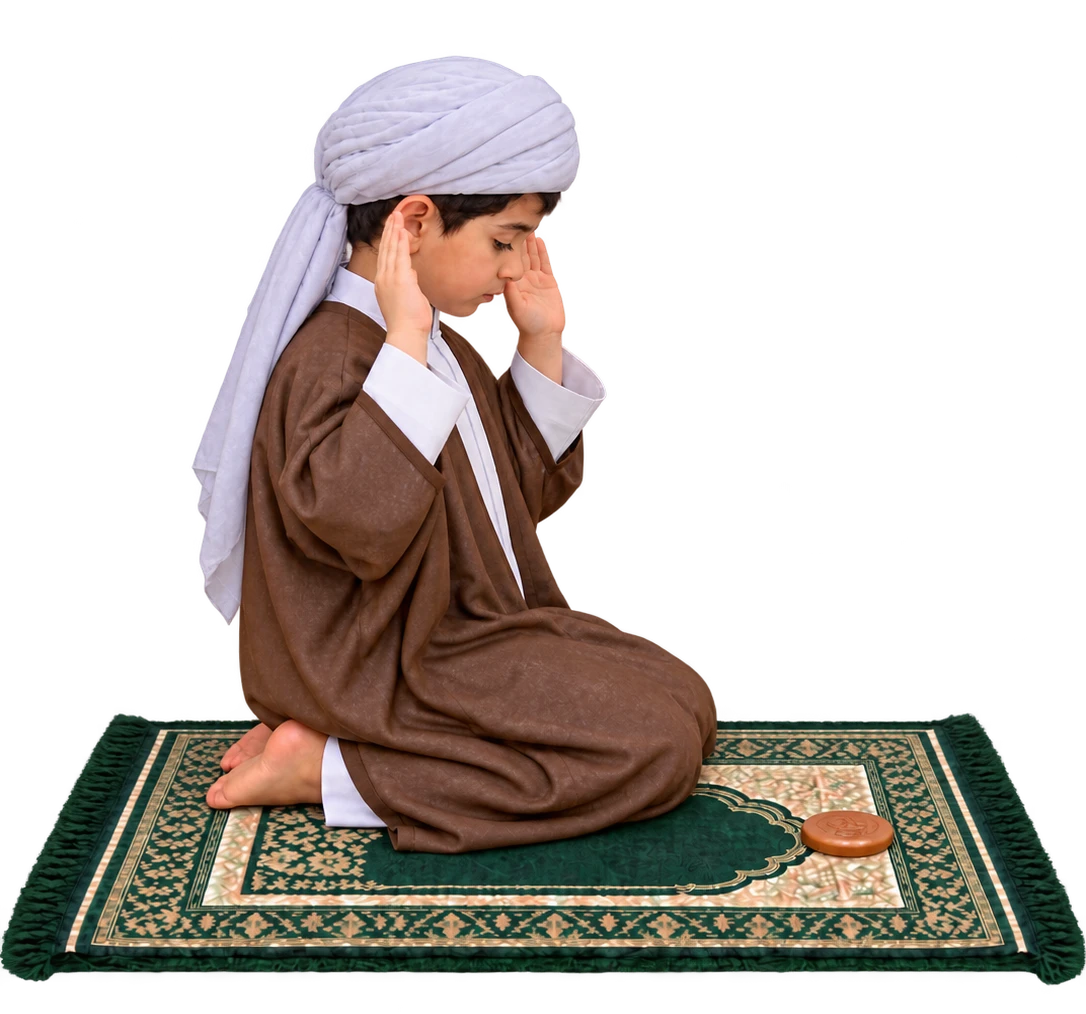
Remain seated exactly as in the tashahhud and, without moving the body, say the salam. The first line is recommended; the second and third are the obligatory salam (one of them is enough, but both are said):
اَلسَّلَامُ عَلَيْكَ اَيُّهَا النَّبِيُّ وَرَحْمَةُ اللّٰهِ وَبَرَكَاتُهٗ
اَلسَّلَامُ عَلَيْنَا وَعَلٰى عِبَادِ اللّٰهِ الصَّالِحِيْنَ
اَلسَّلَامُ عَلَيْكُمْ وَرَحْمَةُ اللّٰهِ وَبَرَكَاتُهٗ
As-salāmu ʿalayka ayyuhan-Nabiyyu wa raḥmatullāhi wa barakātuh. As-salāmu ʿalaynā wa ʿalā ʿibādillāhiṣ-ṣāliḥīn. As-salāmu ʿalaykum wa raḥmatullāhi wa barakātuh.
Peace be upon you, O Prophet, and the mercy of Allah and His blessings. Peace be upon us and upon the righteous servants of Allah. Peace be upon you all, and the mercy of Allah and His blessings.
The prayer is now complete. It is recommended to then say اَللّٰهُ اَكْبَرُ three times, raising the hands to the ears each time, and to begin the ta‘qibat — the Tasbih of Fatimah (a) and the Sajdah of Thanks, which are explained on their own page in this section.
The Third and Fourth Rak‘ahs
In Maghrib (3 rak‘ahs) and in Zuhr, Asr and Isha (4 rak‘ahs), the tashahhud of the second rak‘ah is not followed by the salam. Instead, say اَللّٰهُ اَكْبَرُ, sit for a moment, and stand up saying بِحَوْلِ اللّٰهِ وَقُوَّتِهٖ اَقُوْمُ وَاَقْعُدُ, exactly as in Step 9.
What to recite in the third and fourth rak‘ah
Standing as before, recite either Surah al-Hamd alone (without a second surah) or the Tasbihat al-Arba‘ah, the “four glorifications”, which is the more common choice. It is obligatory to recite them quietly in every prayer, including Maghrib and Isha. Say the tasbihat once as an obligation and three times as a recommendation:
سُبْحَانَ اللّٰهِ وَالْحَمْدُ لِلّٰهِ وَلَاۤ اِلٰهَ اِلَّا اللّٰهُ وَاللّٰهُ اَكْبَرُ
Subḥānallāhi wal-ḥamdu lillāhi wa lā ilāha illallāhu wallāhu akbar.
Glory be to Allah, and all praise is for Allah, and there is no god but Allah, and Allah is the Greatest.
It is recommended to add اَسْتَغْفِرُ اللّٰهَ رَبِّيْ وَاَتُوْبُ اِلَيْهِ after the tasbihat, before going into ruku‘.
Maghrib — three rak‘ahs
First rak‘ah: Steps 1 to 9 (takbir, al-Hamd and a surah, ruku‘, two sajdahs).
Second rak‘ah: al-Hamd and a surah, qunut, ruku‘, two sajdahs, tashahhud — then stand up (no salam).
Third rak‘ah: Tasbihat al-Arba‘ah (or al-Hamd), ruku‘, two sajdahs, tashahhud, then salam.
Zuhr, Asr and Isha — four rak‘ahs
First rak‘ah: Steps 1 to 9.
Second rak‘ah: al-Hamd and a surah, qunut, ruku‘, two sajdahs, tashahhud — then stand up (no salam).
Third rak‘ah: Tasbihat al-Arba‘ah (or al-Hamd), ruku‘, two sajdahs — no tashahhud; sit for a moment and stand up again.
Fourth rak‘ah: Tasbihat al-Arba‘ah (or al-Hamd), ruku‘, two sajdahs, tashahhud, then salam.
Remember: the tashahhud is recited only after the second rak‘ah and after the last rak‘ah. The salam is said only once, at the very end. Qunut is said only in the second rak‘ah.
Rules of Posture and Recitation to Remember
Stillness (tuma’ninah). Every obligatory dhikr — the takbir, the recitation, the dhikr of ruku‘ and sajdah, the tashahhud and the salam — must be said while the body is completely still. Never speak while moving from one position to another.
Qiyam before ruku‘ is a pillar. You must be standing upright and still before you bend into ruku‘. If you fall into ruku‘ from a bent position, or forget ruku‘ and remember it only in sajdah, the prayer is invalid.
Never fold the hands and never say “Amin” after al-Hamd; both invalidate the prayer.
Correct Arabic. The recitation must be in Arabic with the letters pronounced from their correct points of articulation. Learn Surah al-Hamd, the surah and the dhikrs from a reliable teacher.
Continuity (muwalat). Do not leave a gap between the parts long enough that an observer would say the prayer has been broken.
Things that break the prayer include: losing wudu, turning the body away from the qibla, speaking deliberately (even one word), laughing aloud deliberately, weeping aloud for a worldly matter, eating or drinking, folding the hands, saying “Amin”, and any act that destroys the form of the prayer (such as jumping or clapping). Doubts about the number of rak‘ahs have their own rules; forgetting a non-pillar part is set right by the Sajdah al-Sahw explained on its own page.
Women. A woman keeps the feet together in qiyam, bends less in ruku‘ (hands to the thighs), keeps the elbows and body close to the ground in sajdah, and sits with the thighs together; she may recite quietly in every prayer.
The rulings on this page follow the widely accepted verdicts of the maraji‘ of the Ja‘fari school (Tawdih al-Masa’il). Where your own marja‘ taqlid differs on a detail, follow his ruling. The postures and the recommended acts are taken from the narrations of the Ahl al-Bayt (a) in al-Kafi, Man La Yahduruhu al-Faqih and Wasa’il al-Shi‘a.
اَللّٰهُمَّ صَلِّ عَلٰى مُحَمَّدٍ وَّاٰلِ مُحَمَّدٍ